
Muster Mode: Drafting to a Budget
Muster mode in We March as One gives you a fixed budget and a draft instead of a permanent army. Here is how to spend it and what Full Muster requires.
Muster mode sits between Campaign and Tactics. You do not get a persistent army, and you do not get a fixed puzzle army either. You get a budget and a choice: spend it on the shapes you think the battle needs.
That makes Muster the mode that tests your understanding of unit value rather than your ability to paint or grind.
If the shapes still blur together, read the unit roles page→ before you spend a budget.
How a Muster battle works
The structure is simple and unforgiving:
- You receive a gold budget for the battle rather than a roster.
- You spend it on units — more circles, a few triangles, a couple of squares, whatever the budget allows.
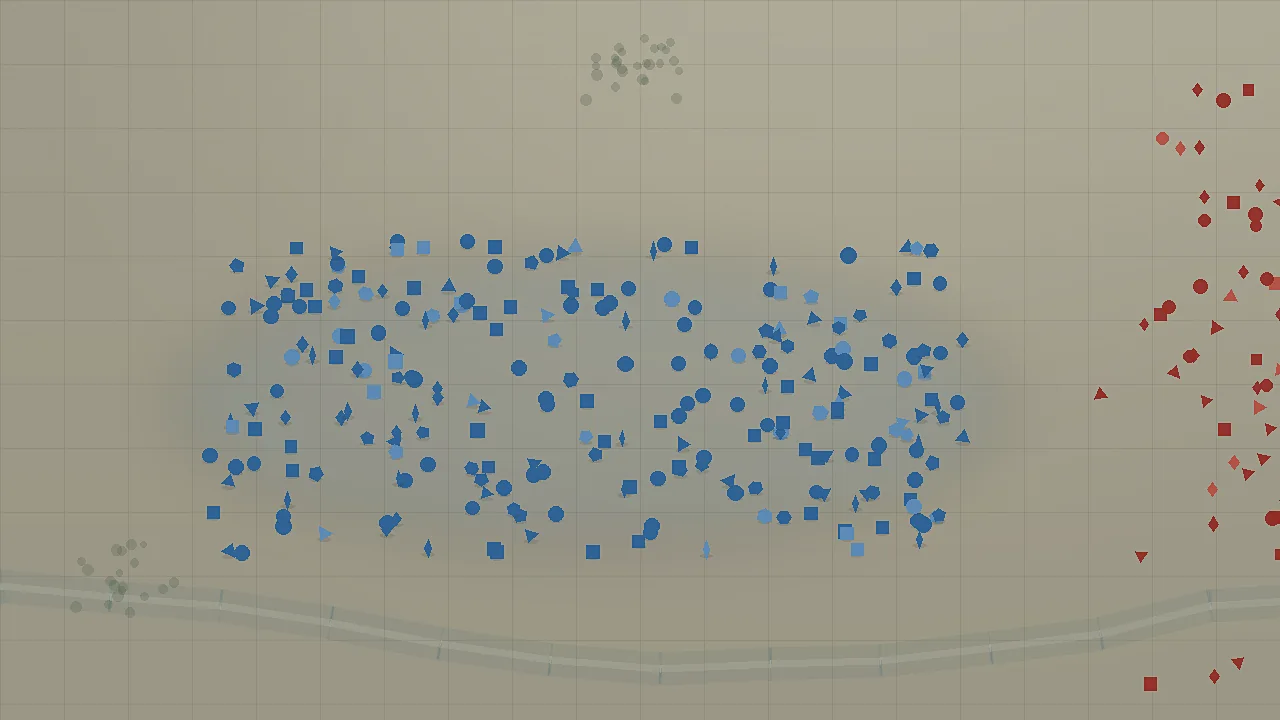
- You paint the army you bought into the deployment zone.
- You choose MARCH or HOLD and fight.
Nothing carries over. The next Muster battle starts with a fresh budget, so there is no compounding and no safety net. Every battle is a pure evaluation of how well you can allocate a fixed amount of gold.
The core tension: depth or variety
Every Muster budget forces the same choice:
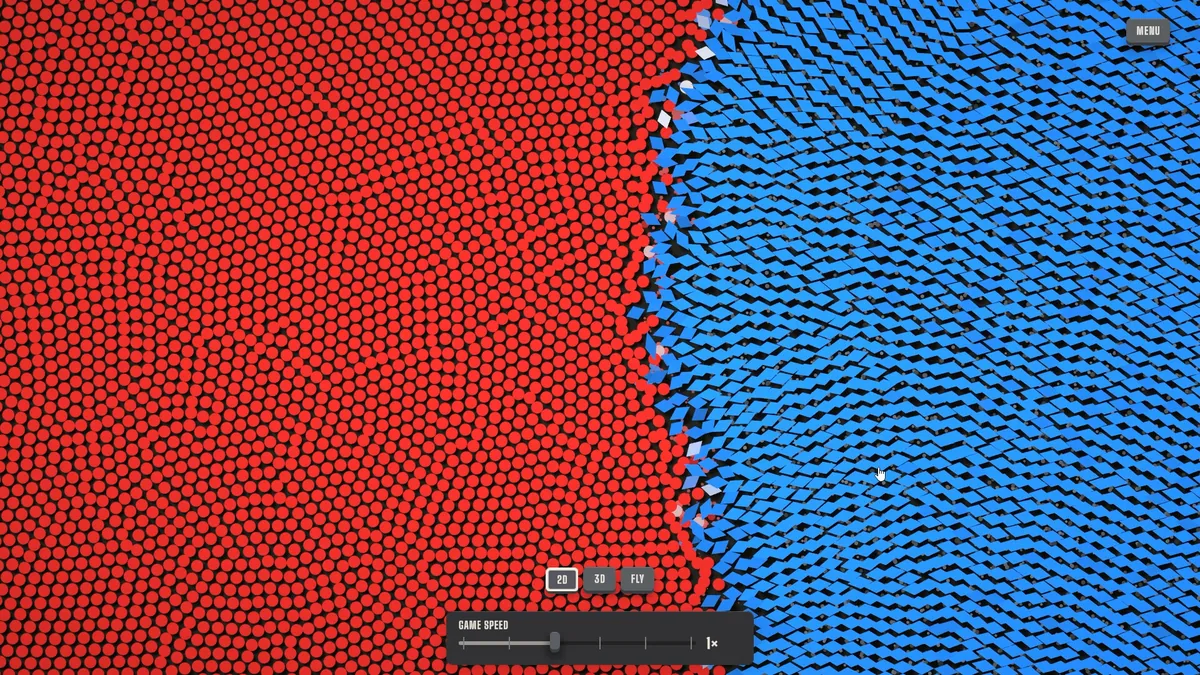
All depth, one shape. Spend everything on circles, paint a deep block, and rely on mass. This works when the map has a choke point, because depth behind a choke is the most efficient use of gold in the game.
Variety, less depth. Buy circles, triangles and squares in smaller numbers, and paint a balanced formation. This works on open maps, where a pure circle block gets flanked and eaten.
The mistake beginners make is buying a little of everything and painting a thin line of it. A thin line of five unit types loses to a deep block of one type, because unit variety does not create contact area.
The tier list ranks shapes by campaign value across fifty levels. Muster has no fifty levels — it has one battle. Draft the shape that solves this map, even if it is a C-tier specialist. A rhombus wall in a city street is worth more than a triangle you cannot fit through the gate.
Drafting by map type
| Map | Draft | Reasoning |
|---|---|---|
| Open field, wide enemy | Circles + hexagons | Width and a screen, so you are not flanked |
| Open field, narrow enemy | Triangles + circles | Concentrate and break |
| Bridge or river | Squares + rhombi | Hold the mouth, fill the corridor |
| City street | Rhombi + squares + triangles | Fill lanes, anchor, break |
| Horde wave | Circles + squares | Depth is the only answer to numbers |
| Fortified position | Squares + triangles + King | Lead with squares, break with triangles |
What Full Muster actually means
The Full Muster achievement requires unlocking every unit and buying all army capacity upgrades. It sits around 8% of players, which is low enough that it is worth reading carefully: it is not a Muster-mode achievement.
It refers to the campaign's unit roster and capacity upgrades — in other words, it is a completion condition for the main game, named after the mode where a full roster would matter most. If you are chasing it, you are chasing the campaign, not Muster battles.
Does Muster feed the campaign?
No. Muster is a standalone mode. Its budget is per-battle and its rewards do not transfer.
That makes it a good place to answer questions cheaply:
- Is this shape worth its cost? Draft it and find out in one battle.
- Does a wedge work on this map type? Muster lets you test without risking campaign gold.
- How much depth do I actually need? Start with a budget-heavy circle block and remove ranks until it breaks.
Players who use Muster as a laboratory tend to make better campaign purchases, because they have seen the shapes fight without the campaign's upgrade tree inflating everything.
Muster versus Tactics versus Campaign
- Campaign — grow an army, keep it, upgrade it. Tests long-term planning.
- Tactics — fixed army, fixed board. Tests reading a puzzle.
- Muster — fixed budget, your choice of army. Tests evaluation.
The three modes are the game's three questions: can you plan, can you read, can you judge. Muster is the judging one, and it is the mode most players skip.
A Muster budget spent mostly on triangles produces a sharp army that dies in the first exchange. Damage needs something in front of it, and in Muster that something has to come out of the same budget.
Official source: We March as One on Steam ↗ — the store page lists Muster as the mode where you choose an army to a fixed budget rather than growing one.
Muster checklist
- Have you read the map before drafting?
- Does the draft have a front, a damage core and enough depth?
- Is anything in the draft a specialist this map does not need?
- Would a deeper version of one shape beat this mix?
- Have you tested this shape in Muster before buying it in Campaign?
Sources
- We March as One on Steam (official store page) ↗
- Steam Community discussions for We March as One ↗
- Steam global achievement stats for We March as One ↗
FAQ
Does Muster use my campaign army?
No. Muster gives you a budget for each battle, and you buy the army from scratch.
Do Muster rewards carry into Campaign?
No. Muster is standalone, with no gold or upgrades transferring.
What is the Full Muster achievement?
Unlocking every unit and buying all army capacity upgrades — a campaign completion goal, despite the mode's name.
Is Muster good for beginners?
It is a good teacher and a harsh one. Beginners should finish Act 1 of the campaign first, then use Muster to test shapes they are considering buying.
Can I choose any unit in Muster?
You can buy whatever your budget allows from the shapes available in the mode. The constraint is gold, not unlocks.