
Tactics Mode: Fixed-Army Puzzles
Tactics mode in We March as One removes recruiting and turns each battle into a placement puzzle. Here is how to read a board and solve it.
Every other mode in We March as One lets you grow. Tactics does not. You are handed a fixed army, a fixed board and a fixed enemy, and the only variables are where you paint and which order you give. The game's own description is blunt about it: placement and orders decide everything.
That makes Tactics the purest test of the thing the campaign has been teaching you all along.
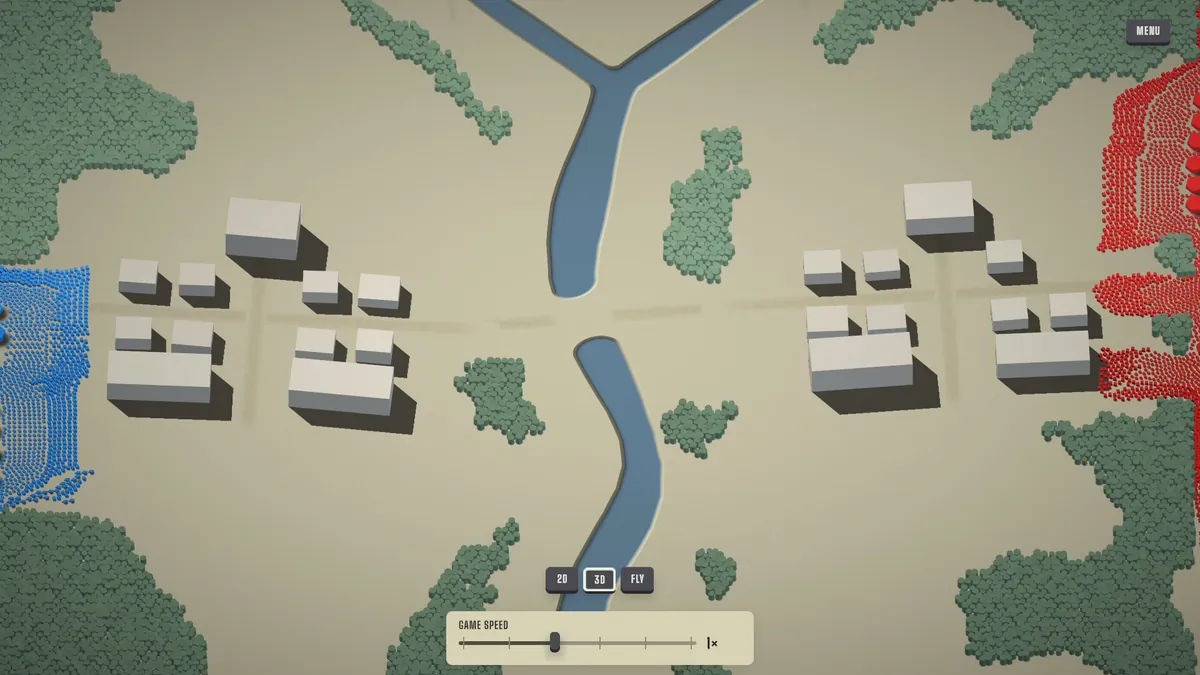
The puzzle types below assume you already know what each shape does→.
What changes in Tactics
| Campaign | Tactics | |
|---|---|---|
| Army | Grows between levels | Fixed per puzzle |
| Recruiting | Yes | No |
| Upgrades | Permanent tree | Not applicable |
| Failure cost | Time | Nothing — reset and retry |
| Solution | Any formation that wins | A specific formation that wins |
The last row is the important one. Campaign levels are forgiving: most can be beaten with several different armies. Tactics puzzles are usually built around one insight — a choke, a refused flank, a unit you have to sacrifice — and the board is designed so that ignoring the insight loses.
How to read a Tactics board
Four questions, in order:
1. What is the terrain telling me? A bridge, a gate or a narrow pass means the puzzle is about concentration. Open ground with a single building means the puzzle is about flanking around it. Walls mean the puzzle is about which lane.
2. Where is the enemy's strength? Find the densest part of the enemy formation. Your plan should avoid meeting it head-on unless you have a specific reason.
3. What am I short of? Tactics puzzles usually give you too much of one thing and not enough of another — plenty of bodies but no damage, or plenty of damage but nothing to hold. The shortage is the puzzle.
4. Which order makes the enemy move first? HOLD makes them come to you, which is usually correct when the terrain favours defence. MARCH is correct when the puzzle has a timer or when the enemy is deployed in a way that only works if you walk into it.
There is no cost to failing a Tactics puzzle. Paint, run it, watch where it breaks, repaint. The mode is designed to be iterated, and the fastest solvers are the ones who treat each attempt as a test rather than a commitment.
The five puzzle archetypes
Most Tactics boards fall into one of these shapes:
The choke. A narrow entrance and an enemy that must come through it. Solution: pile everything into the choke, hold, and put your damage behind the front. The puzzle is usually that the obvious painting is too wide.
The refused flank. An enemy line longer than yours. Solution: refuse one side, concentrate on the other, and break through before the refused side collapses. The puzzle is that the obvious painting is symmetrical.
The sacrifice. A board where you cannot save everything, and the solution requires letting a portion of your army die to buy time. The puzzle is emotional rather than mechanical: players lose because they try to hold everything.
The corridor. Buildings or walls split the board into lanes, and the enemy can move between lanes faster than you. Solution: pick the lane that leads to the objective and ignore the others, or feint in one lane to draw the enemy before committing.
The single point. A board where one unit — often a crow-fed circle or a heavy shape — is worth more than the rest of the army combined. Solution: protect it, place it where it can work, and spend the rest of the army buying it time.
Painting rules that transfer
Tactics rewards three habits that also matter in Campaign:
- Narrower is usually better. If a puzzle feels impossible, try painting half the width and twice the depth.
- The front rank is a shield, not a sword. Put the sturdiest shape in front regardless of what it costs, because a front rank that survives is worth more than a front rank that kills.
- The King is a position. In Tactics boards where a circle can be crowned, the crown is usually the solution — place it at the point the puzzle is built around.
What Tactics teaches you about the campaign
Tactics is the best place to learn the game's core lesson, because it removes the economy. When you cannot buy more units, you are forced to solve the actual problem: given exactly this army, where does it go?
Players who spend an hour in Tactics usually come back to Campaign painting narrower formations and picking choke points earlier. That is not a coincidence — it is the mode doing its job.
Do not expect the units you have unlocked or upgraded to appear in a Tactics puzzle. Each board comes with its own army, and the puzzle is balanced around it.
Official source: We March as One on Steam ↗ — the official description of Tactics mode states that placement and orders decide everything, with a fixed army per puzzle.
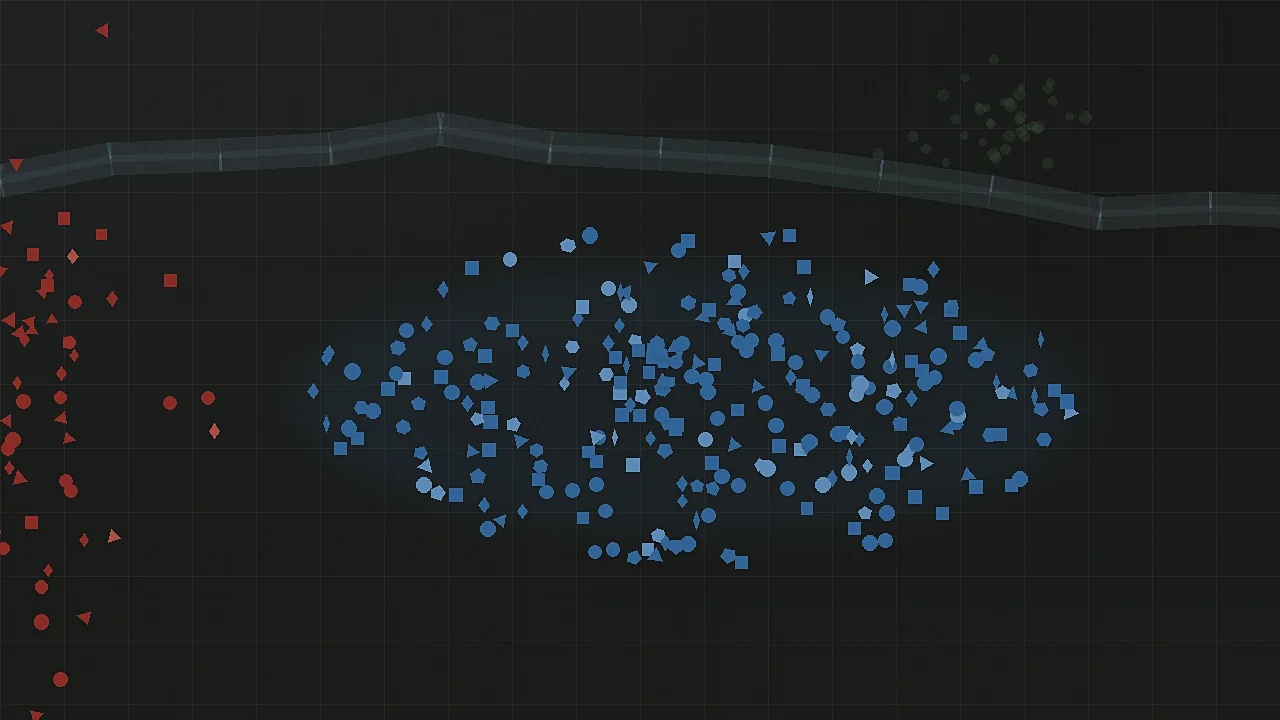
Tactics checklist
- Have you identified the terrain feature the puzzle is built around?
- Is your formation narrower than your first instinct?
- Is the sturdiest shape in front, regardless of damage?
- Have you accepted what you are going to lose?
- Have you tried the other order?
Sources
- We March as One on Steam (official store page) ↗
- Steam Community discussions for We March as One ↗
- Steam global achievement stats for We March as One ↗
FAQ
How do I unlock Tactics mode?
Tactics is one of the game's five modes and is available from the mode select rather than unlocked through the campaign.
Does Tactics give gold or upgrades?
No. Tactics is a standalone puzzle mode with no economy and no progression into the campaign.
How many Tactics puzzles are there?
The mode contains a set of boards rather than a 50-level campaign. Solving a single board unlocks the Tactician achievement, which sits around 8% of players.
Can I crown a circle in Tactics?
On boards that include circles, yes — crowning works the same way as in Campaign, and on several boards it is the intended solution.
Why can't I win a Tactics board I understand?
Usually because the formation is too wide. Try halving the width, doubling the depth, and running it again.